Exercise Bike Benefits: What a Stationary Bike Offers at Home
- Weight & Movement
- 4 min
- The main benefits
- Types of exercise bike
- Setting up the bike
- Simple sessions to try
- Exercise bikes and weight
- Questions people often ask
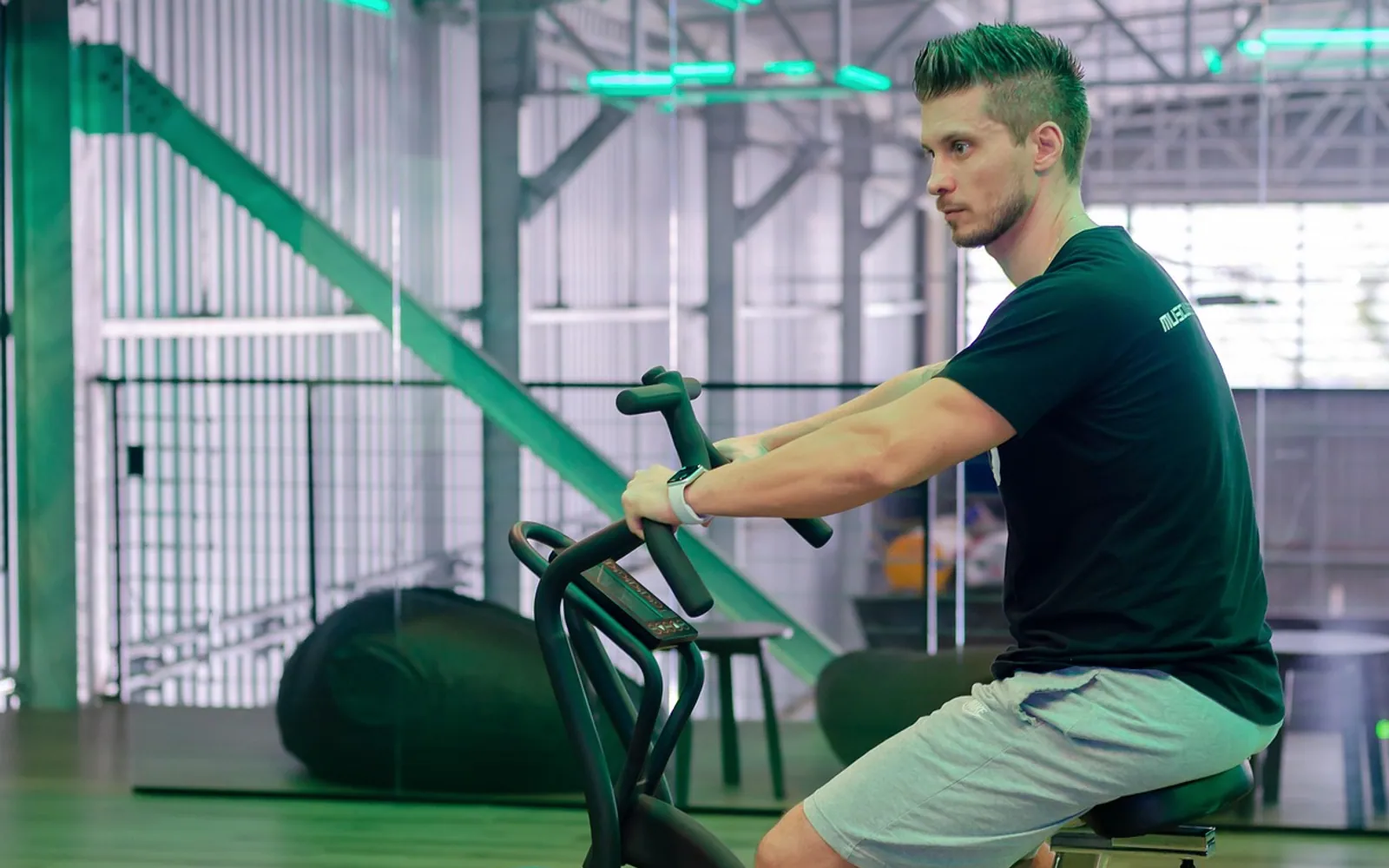
An exercise bike offers steady, low-impact cardio you can do at home whatever the weather. It works the heart, lungs and leg muscles while the saddle carries your body weight, which makes it kinder to knees and ankles than running. It is easy to adjust from very gentle to very hard, quiet enough for most flats, and simple enough to use while listening to a podcast or watching something. Those qualities make it one of the more practical machines for a busy week.
The main benefits
- Joint-friendly. There is no landing with each stroke, so impact on the joints stays low.
- Weatherproof and always open. Cold mornings, late finishes and wet streets stop mattering.
- Easy to scale. Resistance and pace can be adjusted for a first gentle session or a hard interval workout.
- Good for steady sessions. It is easy to hold a comfortable, conversational effort for a long time, the zone described in the guide to zone 2 cardio.
- Works for short bursts too. Ten minutes between tasks still counts, as the article on exercise snacks explains.
- Safer for some people than outdoor cycling. No traffic, potholes or balance concerns.
Types of exercise bike
| Type | Riding position | Suits |
|---|---|---|
| Upright bike | Seated, similar to a road bike but more upright | General fitness, smaller spaces |
| Recumbent bike | Reclined seat with back support, pedals out in front | Back discomfort, balance concerns, getting started |
| Indoor cycling bike | Leaning forward, heavier flywheel, can ride out of the saddle | Harder workouts and class-style sessions |
| Air bike | Seated, with moving handles; fan creates resistance | Full-body intervals; noisier |
For flats, the type of resistance matters. Magnetic resistance tends to be quieter than friction pads or fan-based systems, which helps if neighbours are close by.
Setting up the bike
- Saddle height. With the pedal at its lowest point, your knee should keep a slight bend rather than being locked straight or bent sharply.
- Saddle position. Slide it forwards or back so your knee sits roughly over the middle of the pedal when the crank is level.
- Handlebars. Start higher for comfort; lower bars put more weight through the hands and back.
- Feet. Place the ball of the foot over the pedal and use the straps or clips if the bike has them.
- Floor. A rubber mat protects the floor, reduces vibration and catches sweat.
- Airflow. A fan or an open window makes longer sessions far more pleasant.
Simple sessions to try
Steady ride
Pedal at a comfortable effort where you could hold a conversation. Start with ten to twenty minutes and add time week by week.
Easy intervals
After a warm-up, alternate a minute of harder pedalling with two minutes of easy spinning, repeated several times, then cool down.
Hill blocks
Raise the resistance for a few minutes so it feels like a gentle climb, then ease off and recover before the next block.
Exercise bikes and weight
Riding regularly uses energy, builds fitness and supports general health. Its biggest advantage is that it is easy to repeat, and consistency matters more than any single hard session. On its own, though, exercise tends to make a modest difference to weight compared with changes in eating habits. The article on the easiest way to lose some weight places movement within that wider picture, and for more joint-friendly ideas the guide to low-impact cardio lists other options.
Questions people often ask
Is an exercise bike as good as riding outdoors?
For fitness, both work the heart, lungs and legs in much the same way. Riding outside adds balance, wind, real hills and fresh air, while an indoor bike offers control, convenience and no traffic. Many people find the indoor version easier to stick with, and sticking with it is what counts over a year.
How long should a session last?
There is no fixed rule. Short, comfortable rides that grow gradually are more sustainable than long sessions that leave you sore for days. Bike sessions can simply form one part of your overall weekly activity alongside walking and strength work.
Can it help on days with stiff knees?
Many people with stiff joints find smooth pedalling at low resistance comfortable, but it depends on the cause. If a joint is painful or swollen, ask a GP or physiotherapist what is suitable before riding.
Common mistakes
- A saddle set too low, which loads the knees
- Pedalling against very heavy resistance before building a base
- Hunching the shoulders or gripping the bars tightly
- Ignoring saddle soreness instead of adjusting position or using padded shorts
- Doing every session at maximum effort
Before you start
Speak to a GP before beginning a new exercise routine if you have a heart or lung condition, high blood pressure, diabetes or a joint problem that limits movement. Stop and get help if you feel chest pain, palpitations, dizziness or breathlessness out of proportion to the effort, and ease back if knee or hip pain builds over several sessions.
Read as background, not advice Rain Urbana explains everyday health in general terms and cannot diagnose or treat anyone. Talk to a GP, pharmacist or dentist before changing medicines, diet or activity.