Walking Seoul: Cheonggyecheon and Other Easy City Strolls
- Weight & Movement
- 5 min
- Four easy places to stroll
- How walking fits into a visitor's day
- Shoes, pacing and water
- Counting steps without obsessing
- Ending the day gently
- Quick questions
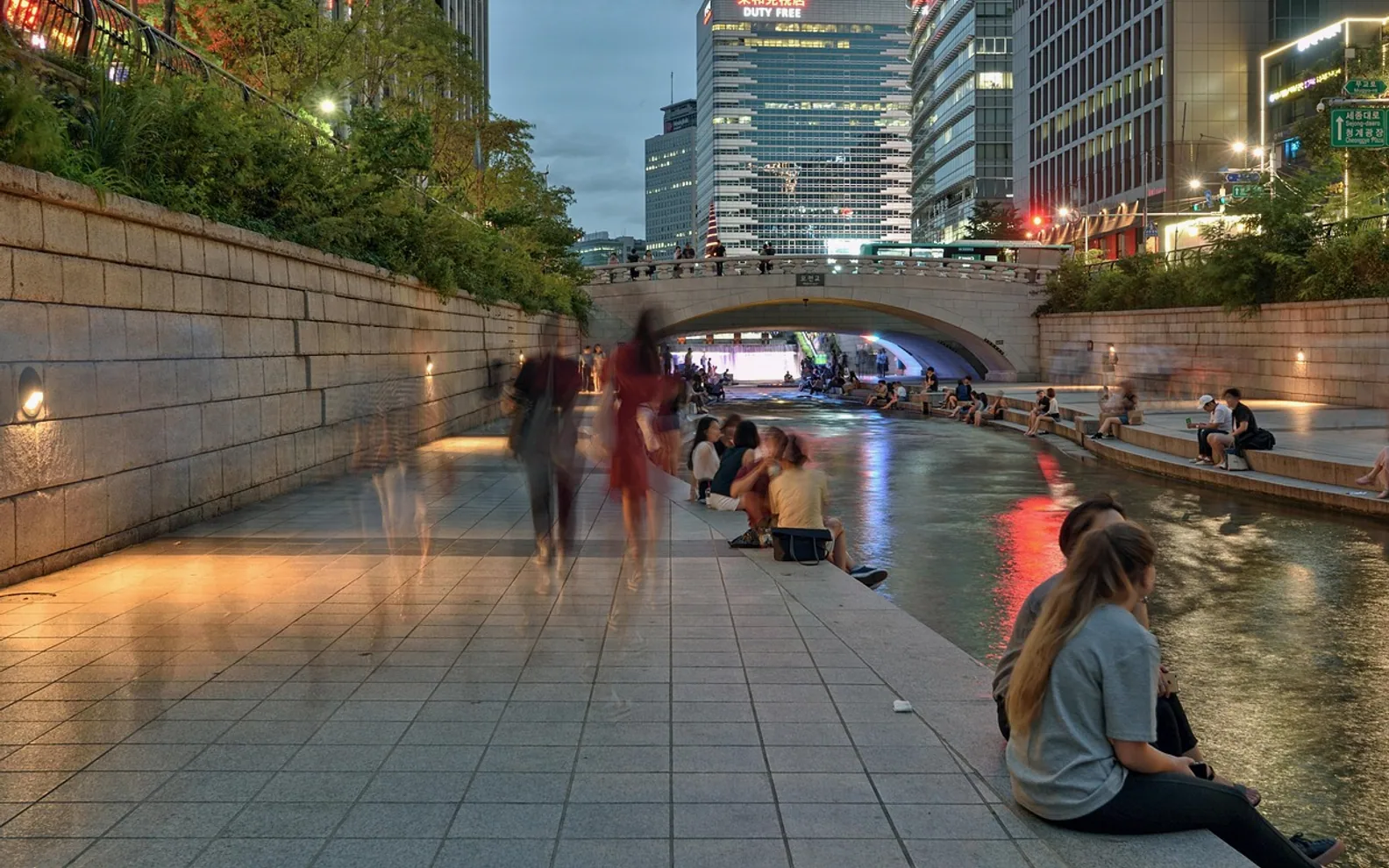
The easiest way to keep moving on a trip to Seoul is to let walking carry the sightseeing. The Cheonggyecheon stream path in the city centre is flat, sunken below street level and dotted with steps back up to the road, so you can walk as much or as little of it as you like. Combine it with a stretch along a palace wall, a riverside path and a leafy street south of the river, and a visitor's day can include plenty of gentle activity without a single workout.
That matters because travel days often swing between long hours of sitting on planes, trains and buses and sudden spells of rushing. Steady walking at a comfortable pace sits in between, and for many people it is the most sustainable form of movement there is.
Four easy places to stroll
Cheonggyecheon stream
Once covered by roads, the stream was restored into a long walkway with water, stepping stones, bridges and planting running through the centre of the city. Because the path lies below the traffic, it feels noticeably quieter than the avenues above. It is a good choice for a first walk: there is little to get lost on, the surface is even, and frequent stairways let you leave whenever your legs say so. Evenings bring cooler air and lighting along parts of the route.
Along the palace walls
The stone walls around the old royal palaces make for some of the most pleasant short walks in Seoul. Tree-lined lanes follow the walls in several places, with benches and shade along the way. Pairing a palace visit with a slow loop around its outer walls adds movement to what might otherwise be a lot of standing in courtyards.
Han River paths
The wide river splits the city, and long parks run along much of both banks. Paths there are shared with cyclists, so keep to the walking side and look behind before changing lanes. The riverside is open and can be exposed to sun and wind, which makes a hat and water more important than on the shadier inner-city routes.
Gangnam's tree-lined streets
South of the river, Gangnam is often thought of as a district of offices and shopping, yet several of its side streets are lined with trees and small shops. A wander along them suits the late afternoon, when the heat eases and you are moving gradually towards dinner.
How walking fits into a visitor's day
Rather than planning one long walk, it often works better to spread several shorter ones across the day:
- Morning: a relaxed stroll while the city is cooler, such as the stream path or a palace wall loop.
- Midday: indoor sights, a proper meal and a sit-down. This is the time to rest your feet, not push on.
- Late afternoon: a second walk, perhaps along the river or through a neighbourhood you have not seen yet.
- Evening: something social and easy on the body to round things off.
This pattern of short bursts with rests between them echoes the idea behind exercise snacks: movement spread through the day can feel easier to keep up than one big effort.
Shoes, pacing and water
- Shoes: wear a pair you have already broken in. New shoes on a holiday are a common cause of blisters. Cushioned soles help on long stretches of pavement, and a spare pair of socks is worth carrying on hot days.
- Pacing: aim for a speed at which you could hold a conversation. That conversational effort is close to what is described in our guide to zone 2 cardio, and it lets you keep going for longer without arriving at dinner exhausted.
- Water: carry a bottle and sip regularly, particularly on the open riverbanks and in warmer months. Convenience stores are easy to find for refills.
- Breaks: sit down before you feel you need to. A ten-minute rest on a bench can make the next hour far more comfortable.
- Weather: summers can be hot and humid and winters cold, so dress in layers and shorten walks when conditions are harsh.
If you have a heart or lung condition, joint problems, or are recovering from an illness or injury, talk to your doctor before planning long walking days, and stop if you feel dizzy, short of breath or unwell.
Counting steps without obsessing
A phone or watch can be a fun way to see how far a day of exploring took you. The risk is that the number starts running the trip. A few gentle rules help keep it in proportion:
- Glance at the total at the end of the day rather than checking it every hour.
- Treat a low-step day of museums and long meals as a rest day, not a failure.
- Notice how you feel, such as energy, sleep and sore spots, as much as the figure on the screen.
- Do not chase a target with blistered feet or in heavy heat.
Ending the day gently
After a day on your feet, an evening that is social but low in effort fits well. In Korea, a popular option for groups is a private karaoke room, where friends book a small room together, pick songs on a screen and take turns at the microphone. Singing and laughing with others is a pleasant way to unwind, and you can sit down between songs. Visitors who would like to read about how karaoke rooms in the area usually work can look up Korean-language guides under the search term 강남 가라오케 before choosing a place. If drinks are part of the evening, pace them alongside water and arrange a taxi or the metro home rather than getting behind the wheel.
Quick questions
Is Seoul a walkable city for older visitors?
Many central routes are flat and well paved, and the stream and river paths have frequent exits. Hills and stairs exist in older neighbourhoods, so choose routes that suit your mobility and build in plenty of rests.
Do I need special walking gear?
No. Comfortable shoes, a water bottle, sun protection in summer and warm layers in winter cover most needs.
Walking is one of the gentlest ways to stay active while travelling, and Seoul gives you good places to do it. Keep the pace easy, rest often and let the city set the route.
Read as background, not advice Rain Urbana explains everyday health in general terms and cannot diagnose or treat anyone. Talk to a GP, pharmacist or dentist before changing medicines, diet or activity.